Penang in three days: a balanced itinerary for first-time visitors
 By Samir Cole
Penang rewards curious travelers who leave space between its famous sights. This three-day plan combines George Town heritage, local food, a little nature, and practical pacing without turning every hour into a commitment.
Why three days works well in Penang
Three days is enough to understand Penang without reducing it to a checklist. The island has a compact historic core, a strong food culture, beaches and hills, and neighborhoods that reward slow wandering. The useful trick is to group sights by area. Spend one morning and evening around George Town, then use the other days for a mixture of nearby culture, scenery, and unplanned stops.
This itinerary assumes you are staying in or near George Town and are comfortable using short taxi or ride-hailing trips. It also assumes that meals are part of the experience rather than fuel between attractions. Keep one flexible hour each day. A mural may lead to a lane, a coffee stop may become lunch, and the weather can make a slower plan much more enjoyable.

Your trip deserves fewer tabs.
Start planning your tripSet up your first morning
Begin with a simple orientation walk instead of booking an early tour. George Town is easiest to read on foot when the streets are still relatively calm. Choose a route that passes several blocks of shophouses, a market or food court, and one heritage building. Your goal is to learn the scale of the center, not to see every landmark before breakfast.
Wear shoes that handle uneven pavements and bring water. Heat and sudden rain can change the comfortable walking distance quickly. Save the places you genuinely want to revisit in a travel board, grouping them by neighborhood and time of day. Holihopper's guide to planning and organizing an itinerary is useful if you want the map and saved places to remain visible while you adjust the route.
Day one: discover George Town slowly
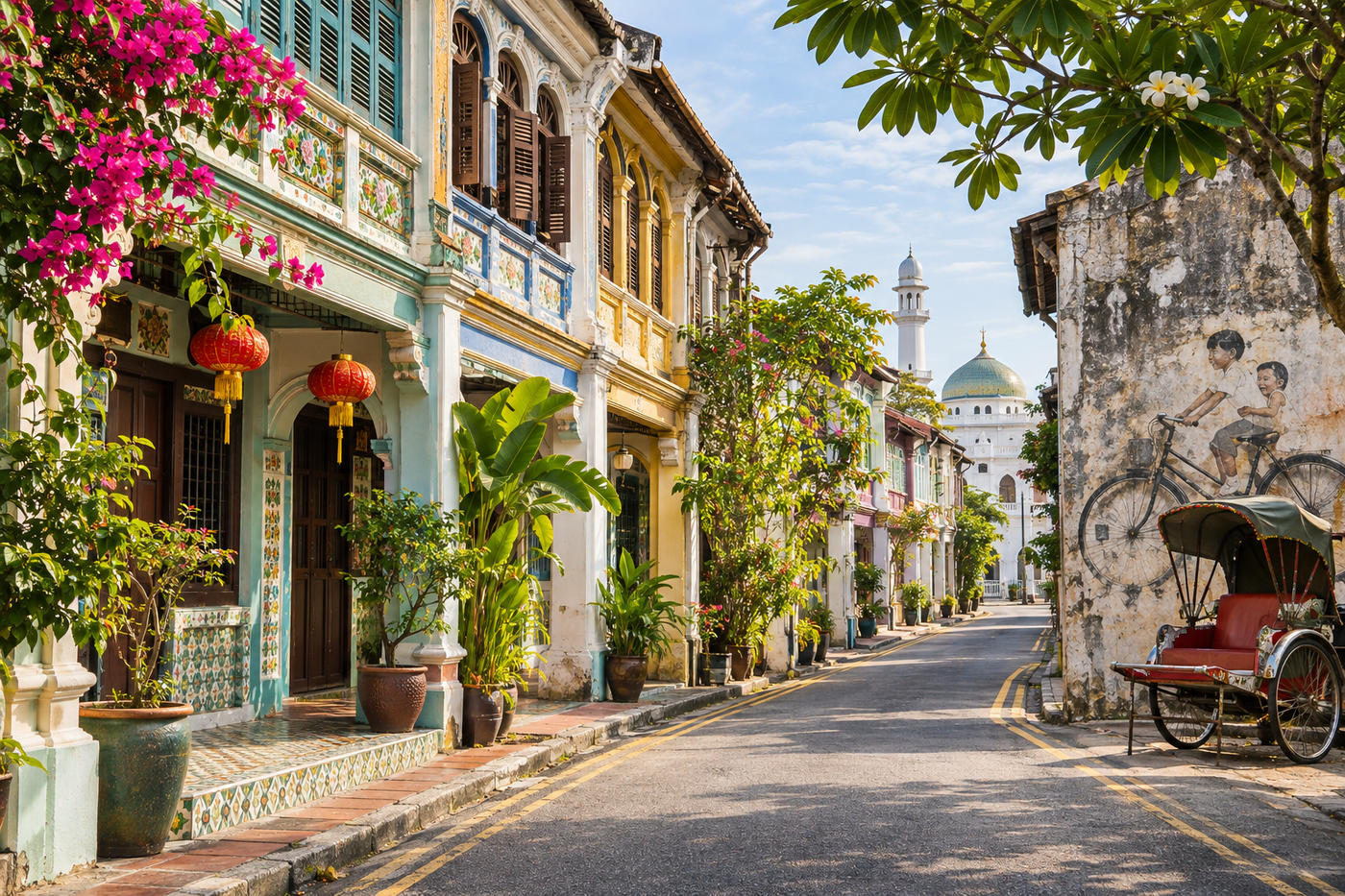
Use the first day for the historic center. Start with a heritage street or clan-house area in the morning, when the light is pleasant and the streets are more comfortable for photographs. Move between major buildings and smaller lanes rather than walking directly from one famous stop to another. The transitions are part of the experience, especially where old shopfronts, temples, mosques, and everyday businesses share the same streets.
After a late breakfast or early lunch, choose only one substantial indoor attraction. A museum, mansion, or cultural center gives you a pause from the heat and adds context to the architecture outside. In the afternoon, return to the streets for details you missed earlier. Keep the evening close to central George Town so dinner remains easy, even if rain or tired legs change your plans.
Build food stops into the route
Penang food is best approached as a sequence of small decisions, not one grand reservation. Try a local breakfast, share a few dishes at lunch, and leave room for a hawker-style dinner. Look for busy stalls with a clear queue and a fast turnover, while remembering that popularity does not mean every dish will suit you. Ask for a mild version if you are sensitive to spice, and carry small notes or a payment method accepted by the stall.
Plan your route around eating windows. A market may be lively in the morning but quiet later, while a food court may be most useful when you need variety for a group. Avoid scheduling a major attraction immediately after a heavy meal. Instead, make the next stop a shaded walk, a café, or an indoor visit where the slower pace feels intentional.
Make the first evening easy
On the first evening, choose atmosphere over distance. A short walk through illuminated streets, a drink in a restored shophouse, or a relaxed dinner near your accommodation is enough. You do not need to cross the island after a full day on foot. If you still have energy, add one nearby viewpoint or lane, but keep the return journey simple.
This is also the best moment to review the next two days. Check the forecast, opening information, and transfer times for any place that needs a booking. Move outdoor activities earlier if a hot afternoon is expected. A balanced itinerary is allowed to change. The point of planning is to protect your best experiences, not to make every original decision permanent.

Turn your travel ideas into a plan.
Start planning your tripDay two: combine a hill or temple with local neighborhoods
Start day two outside the tightest center. Penang Hill or another elevated nature stop can provide cooler air and a different view of the island, but allow extra time for queues and transfers. Go early if the site is central to your plan. Once there, choose a short walk or viewpoint rather than trying to cover every path. The value is contrast: after the dense streets of George Town, greenery and distance reset the pace.
Return toward the city for lunch and spend the afternoon in a neighborhood that feels more residential or waterfront-oriented. Choose two or three anchors, then follow the streets between them. This arrangement prevents the common mistake of spending the entire day in transit. If weather is unsettled, keep a museum, café, or covered market as a ready alternative.
Know what to book and what to leave open
Book only the experiences where availability genuinely matters. A popular guided food walk, a timed attraction, or a special evening meal may deserve a reservation. Ordinary walks, most casual meals, and many neighborhood visits are better left flexible. Confirm the cancellation policy and meeting location before paying, particularly when transport across the island is involved.
Do not build a day around an unverified promise of perfect access. Opening hours, weather closures, and public holidays can alter the experience. Keep the booking confirmation available offline and add a buffer before and after it. If a reservation is early, stay nearby the previous night rather than assuming a long cross-island transfer will be painless.
Day three: choose between coast, culture, and a second look
Use the final day according to your energy. Travelers wanting a coastal change can head toward a beach area and keep the plan light: a morning walk, lunch, and time to sit are enough. Travelers more interested in culture can revisit George Town for a museum, religious site, or craft-focused street that was skipped on day one. Both versions work because they avoid the pressure to collect an entirely new list.
Leave the afternoon open for a final favorite meal, a small purchase, or a return to a place that looked better in passing. This is often when Penang becomes personal. A second visit to one street can be more memorable than a rushed landmark. If you have a late departure, keep luggage and transfer logistics in mind before choosing a distant final stop.
Use a realistic morning and evening rhythm
Plan one main area per half-day and two or three meaningful anchors within it. A morning can include a walk, a breakfast stop, and one interior visit. An evening can include dinner and one gentle activity. That is a full day in a warm, walkable city. Add optional stops in a separate layer so you can see them without treating them as obligations.
Rest before you urgently need it. A shaded drink, a short ride, or an hour at the hotel can save the evening. Keep navigation time visible when your route crosses water, hills, or busy roads. The best itinerary is not the one with the most pins. It is the one that still feels good when a meal takes longer, rain arrives, or you discover a street worth exploring.
Common mistakes first-time visitors make
The first mistake is treating Penang as only a list of murals. They are enjoyable, but the island's character also comes from food, religious architecture, daily commerce, and the relationship between the old center and the surrounding landscape. The second mistake is underestimating heat. Midday walking without shade, water, or a break can make the rest of the itinerary feel harder than it needs to be.
Another mistake is crossing the island repeatedly for isolated reservations. Cluster activities geographically and check the return route before committing. Finally, avoid assuming that a famous stall or attraction will match your personal interests. Keep alternatives nearby and let one disappointing stop remain small. Flexibility is a practical travel skill, not a failure of planning.
Practical details that make the plan smoother
Use breathable clothing, comfortable footwear, sun protection, and a small bag for water and a light rain layer. Save accommodation details and important confirmations offline. Ride-hailing can be convenient for heat, distance, or late evenings, while walking is usually the most rewarding way to understand the historic core. Allow time for traffic when you have a fixed booking or airport transfer.
Respect places of worship and residential streets. Dress appropriately where requested, ask before photographing people, and avoid blocking narrow shopfronts. For food, mention allergies clearly and do not assume that a familiar-looking dish has familiar ingredients. These small habits protect your comfort and make the city easier to enjoy.
Leave with a shortlist, not a score
At the end of three days, measure the trip by the moments you would willingly repeat. Perhaps it is an early street walk, a bowl shared at a busy stall, a hill view after rain, or a quiet lane found between major sights. Those memories usually come from having enough time to notice what is around the plan.
Keep your saved itinerary as a record of what worked and what you would change. If you return, you can build around one neighborhood or use Penang as a slower base for nearby exploration. For a first visit, the balanced version wins: a little structure, plenty of food, sensible transfers, and enough empty space for the island to surprise you.