How to protect your money while traveling: a simple step-by-step guide
 By Leo Morgan
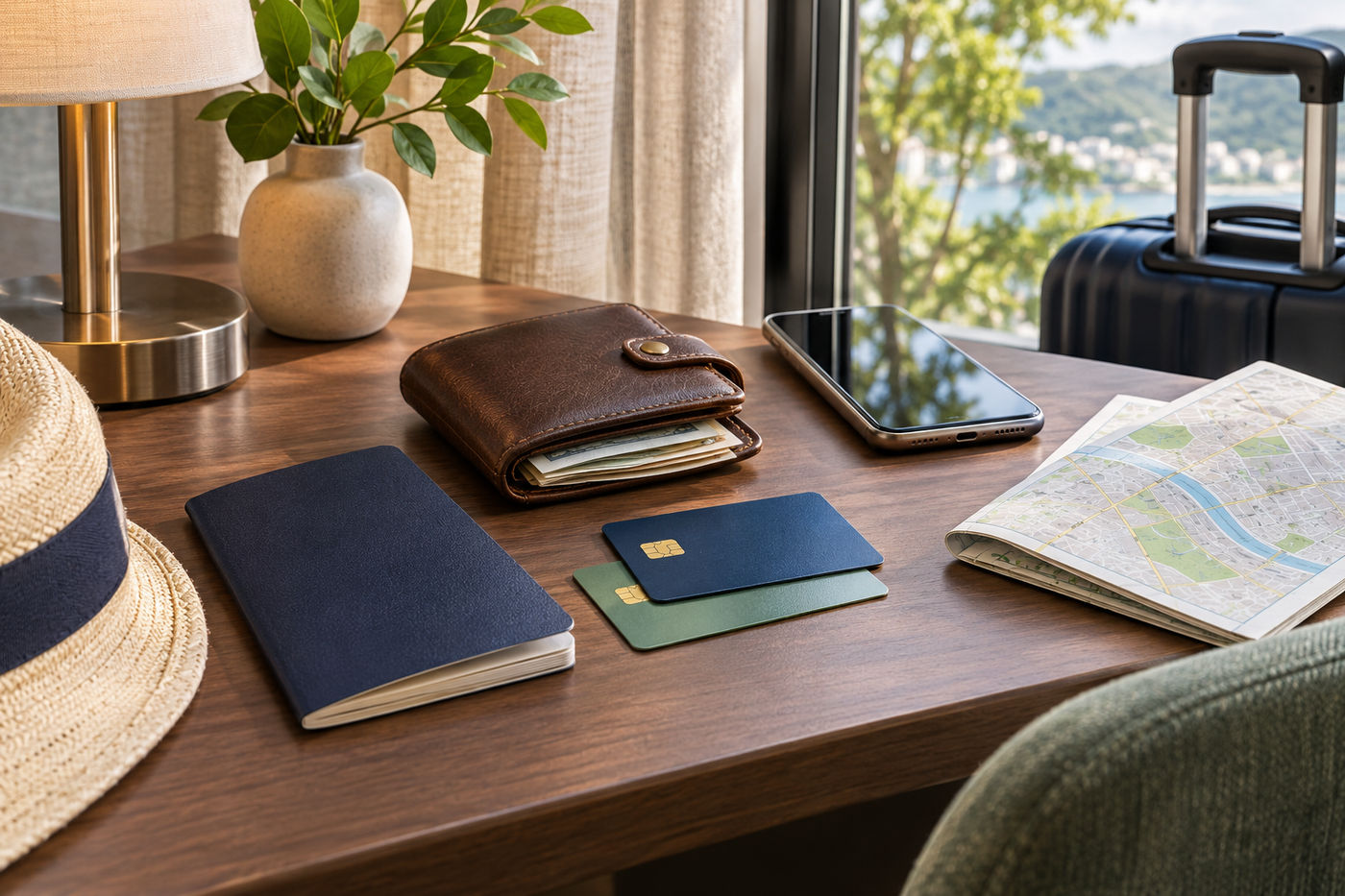
A few simple habits can make travel money safer and easier to replace. Prepare your cards, split your cash, protect your ATM routine, and keep an emergency backup before you leave.
Begin with a simple risk map
Travel money problems usually come from one of four situations: a card is lost, a payment is declined, cash is stolen, or a traveler cannot access an account quickly. You do not need an elaborate system to reduce those risks. You need more than one way to pay, a way to freeze access, and a small reserve that is not kept in the same place.
Think in layers rather than one perfect wallet. Your everyday payment method should be convenient, your backup should be separate, and your emergency information should be available even if your phone or bag disappears. Review the plan with anyone traveling with you so both people know what to do.
Consider the shape of your trip before deciding how much access you need. A city break with card terminals everywhere is different from a rural route with long gaps between services. The plan should match the destination, your companions, and the consequences of a delayed payment.

Your trip deserves fewer tabs.
Start planning your tripChoose cards for fees and flexibility
Before a trip, compare the foreign-exchange fee, cash-withdrawal fee, daily limits, and replacement process for each card you might use. A fee-free card can save money, but the most important feature is reliability in the countries on your route. Keep at least two cards from different issuers if possible.
Check whether your bank requires travel notices, whether contactless payments work abroad, and whether a card can be added to a mobile wallet. Save the support number in a secure place. Do not choose a card only because a travel blog calls it free, since exchange-rate markups and ATM charges can still apply.
Prepare accounts before you leave
Log in to each banking app, confirm that your phone number and email are current, and test the authentication method you will use abroad. If approval depends on a text message to a number that will not work at your destination, arrange a safer alternative with the bank before departure.
Turn on transaction alerts and make sure you recognize the difference between a temporary authorization and a completed charge. Write down account support details without recording full card numbers in an exposed note. A short pre-trip check can prevent a stressful support call from an airport lounge.
Split cash instead of carrying one bundle
Carry only the amount you expect to use that day, and divide it between a wallet, a secure inner pocket, and a locked place in your accommodation. Keep a modest emergency reserve separate from your everyday cash. The goal is not to hide money dramatically, but to avoid losing every option at once.
Use small denominations when practical, because small vendors may not be able to change large notes. Avoid displaying a full wallet in a crowded place. Refill your daily amount privately and make a quick check before leaving a taxi, restaurant, or hotel room.
Use ATMs with a deliberate routine
Prefer ATMs attached to a bank branch or located in a well-used, monitored place. Inspect the machine briefly, cover the keypad, and be willing to cancel if anything looks loose, unusual, or crowded. Avoid accepting help from strangers who approach during a withdrawal.
When a machine asks whether to convert the withdrawal into your home currency, read the choice carefully. Dynamic currency conversion can use a poor exchange rate, although the best option depends on the specific screen and your card terms. Keep the receipt only if it helps you reconcile the amount, then dispose of it safely.

Turn your travel ideas into a plan.
Start planning your tripKnow how card locks work
Many banking apps let you freeze a card instantly. Learn where that control sits before you travel, and check whether it blocks cash withdrawals, contactless payments, or only certain transaction types. A temporary lock is useful when a card is misplaced and may be safer than waiting to decide whether it is permanently lost.
If a card is stolen, freeze it, contact the issuer through an official channel, and ask about replacement and fraudulent charges. Never share a one-time passcode with someone who calls claiming to be your bank. A real support process should not require you to reveal a full security code over an unsolicited call.
Protect the phone that protects your accounts
Your phone may be the key to banking, email, maps, and travel bookings, so protect it like a wallet. Use a strong device passcode, enable biometric locking where appropriate, and install updates before departure. Do not leave an unlocked phone on a café table or in an open hotel room.
Keep a written or printed note with the bank names and official contact routes, but not your passwords or full card details. If you use a password manager, make sure you understand its offline access and recovery process. A small amount of preparation matters if the phone is lost with your main card.
Build an emergency backup
Keep one backup card separate from your everyday wallet, and consider leaving a trusted person at home with copies of your itinerary and issuer contact information. Store copies of important documents securely, with sensitive numbers partially obscured. The backup should help you prove who you are and reach support, not create a new privacy risk.
Carry enough accessible funds for transport, food, and one night if your main payment method fails. That amount depends on the destination and your travel style, but it should be practical rather than your entire trip budget. Decide in advance how you would receive a transfer if every card were unavailable.
Use a two-minute daily check
At the end of each day, check recent transactions, return cards to the same secure place, and make sure your cash and phone are accounted for. This catches a suspicious payment while the details are fresh. It also prevents the familiar travel problem of leaving a card in a restaurant terminal or an ATM.
Keep a simple note of cash withdrawals and major purchases, especially on a long trip. Do not obsess over every small expense, but do look for duplicate charges, unfamiliar merchants, or a total that does not match the receipt. Contact the issuer promptly if something appears wrong.
Recognize common payment traps
Be cautious around crowded ATMs, unattended card terminals, unofficial exchange desks, and anyone who creates urgency around a payment. Check the amount and currency on a terminal before confirming. If a merchant asks for your card to be taken out of sight, ask whether the transaction can happen in front of you.
Do not assume a card is safe simply because it worked once. Keep alerts active and use a low-limit everyday card if that makes you more comfortable. For family trips, agree who handles the shared reserve and do not keep every payment method in one person’s bag.
Know what to do when money goes missing
Move somewhere safe, freeze the missing card, and list what is gone. Contact the issuer through the official app or number, then report theft to local authorities if an insurance claim or document replacement requires it. If your passport is missing, follow the relevant embassy or consular process rather than relying on a bank to solve the problem.
Tell a travel companion or trusted contact what happened, and protect the remaining backup. Write down the case number and the name of the support channel. Calm, ordered steps are more useful than trying several unverified numbers found through a search.
Turn the checklist into a travel habit
Before departure, choose your fee-free or low-fee cards, notify the bank if needed, split cash, place the backup card separately, and confirm that you can lock an account. During the trip, use safe ATMs, check alerts, and keep one reserve untouched except for a genuine problem.
Money safety should support your trip rather than dominate it. A layered setup gives you convenience for ordinary purchases and a clear recovery route when something goes wrong. Add the steps to your packing routine, then spend your attention on the journey itself. For another practical family-planning idea, you can also review ways to keep kids entertained while traveling.
Review the system before every departure
Money safety is easiest when it becomes part of packing. Confirm the cards you are taking, test the banking app, check your emergency reserve, and remove old receipts or notes that expose information. If the trip crosses borders, review whether limits, fees, or authentication rules change.
Once the routine is in place, stop thinking about it. You have created several ways to pay and a clear route back into your accounts. That preparation lets you enjoy the practical freedom of travel without carrying every possible financial worry through the day.