How to plan a train trip through Europe: what experienced travelers check first
 By Leo Morgan
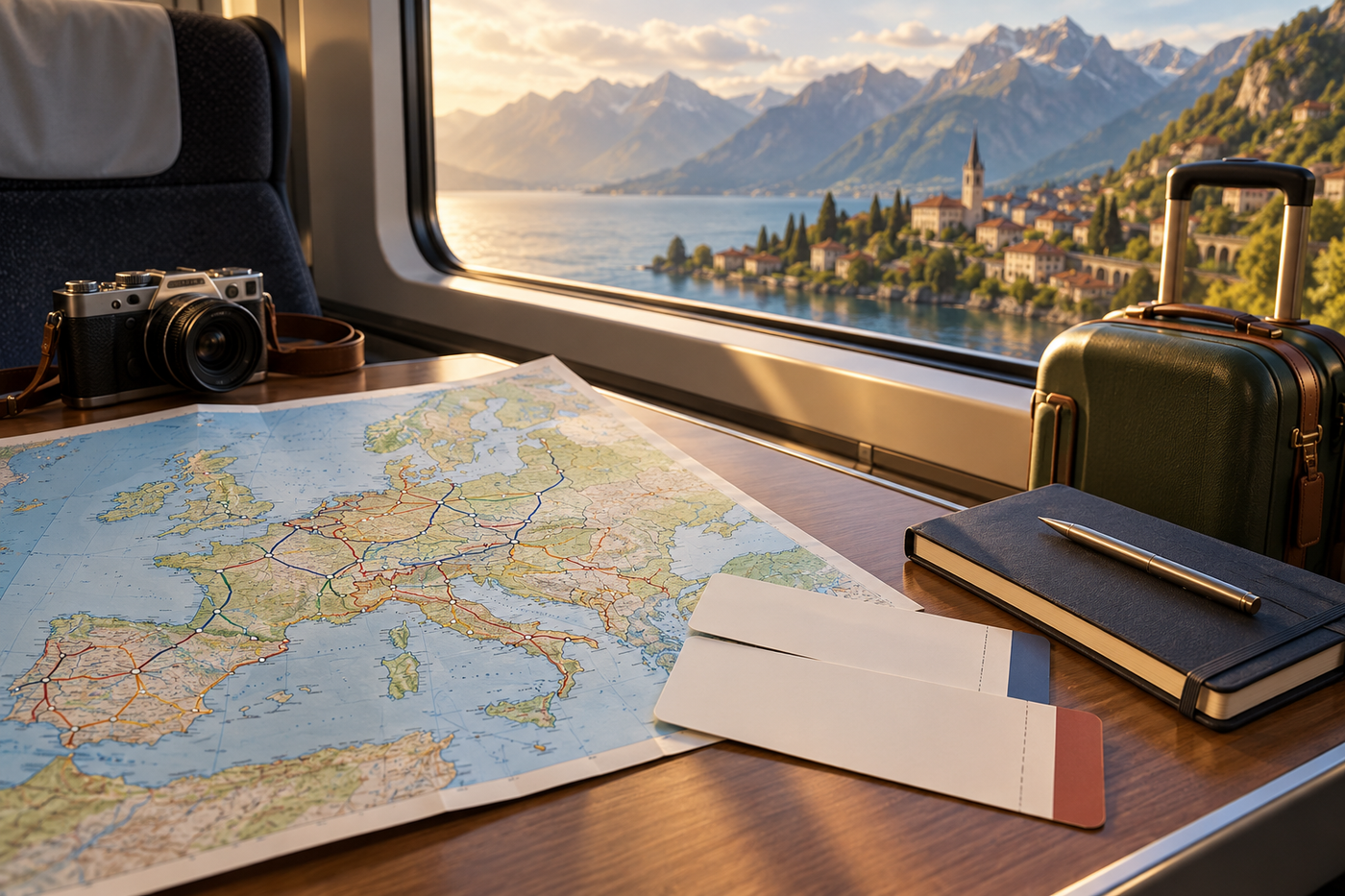
A European rail trip becomes easier when you check connections, reservations, luggage, and pacing before buying tickets. Here is a practical way to turn several cities into one manageable journey.
Define the shape of the journey first
Start with the experience you want from the rail trip. A route through major capitals feels different from a slower journey through smaller cities and landscapes. Decide whether the train is mainly transport or part of the holiday. That answer affects how many hours you want to spend in transit and how much time you need at each stop.
Choose a sensible start and finish rather than trying to connect every place you have heard about. An open-jaw route, arriving in one city and leaving from another, can reduce backtracking. It can also make flights more complicated, so compare the whole journey before committing.

Your trip deserves fewer tabs.
Start planning your tripBuild the route around travel days
List the cities in order and write the likely train time between each pair. A short journey can fit comfortably into a morning or afternoon. A long journey may take most of a day once you include station access, a connection, and time to settle into your accommodation.
Experienced travelers avoid treating every line on the map as equally easy. Borders, mountain routes, overnight trains, and changes between operators can alter the practical effort. Keep the most demanding journey away from your arrival day if possible, and do not make a tight connection the foundation of the entire trip.
Compare rail passes with point-to-point tickets
A rail pass can be convenient when the route is flexible or includes several expensive long-distance journeys. It does not automatically make every trip cheaper. Some trains still require a paid reservation, and a pass may count travel days in a way that does not match your plan.
Price the actual itinerary in both directions. Include reservations, supplements, local transport to stations, and the value of being able to change a ticket. If your cities are connected by inexpensive advance fares, point-to-point tickets may be simpler. If the route is still evolving, flexibility can justify a higher price.
Check which trains need reservations
High-speed and international services often have different rules from regional trains. A pass may let you board one service without a separate ticket, but not without a seat reservation. Popular departures, summer weekends, and holiday periods can sell out even when another train on the same route has space.
Record every reservation in one place and note the departure station exactly. Some cities have several stations with similar names or stations far from the historic centre. If a reservation is non-refundable, leave a little more margin around the journey that leads to it.
Understand station transfers
A connection is only as easy as the stations involved. Check whether you stay on the same train, change platforms in one station, or cross a city to a different terminal. Add time for finding the exit, buying a local ticket, and orienting yourself with luggage.
When you have a choice, prefer a slightly longer same-station connection over a short cross-city transfer. If a station change is unavoidable, write the local route and a fallback into the plan. A city guide such as this Brussels weekend overview can also help you understand where a central station sits relative to the places you want to see.

Turn your travel ideas into a plan.
Start planning your tripPack for movement, not just for the destination
Train travel rewards a smaller bag. You may need to lift it onto a rack, keep it beside your seat, move quickly through a platform, or carry it over uneven paving between stations and hotels. A compact case or backpack with a simple internal system is easier than a bag that needs constant repacking.
Keep documents, medication, water, a layer, and chargers accessible. Put valuables in a place that stays on your person or within clear sight. Check operator rules for large luggage, bicycles, and special equipment before the day of travel, rather than discovering a restriction on the platform.
Give each stop enough time
Changing cities every night creates a very different holiday from staying three nights in one place. Allow for the time lost to check-out, station travel, arrival, finding the hotel, and re-establishing your bearings. A city that looks like a quick stop may need two full days to feel more than a photograph taken between trains.
Use longer stays for places with day trips, complex public transport, or a strong food and culture scene. Short stays work better when the station is central and the main sights are close together. If you want a scenic route, count the journey as an experience and reduce the sightseeing targets at the destination.
Book in an order that protects the route
Secure accommodation and the most constrained long-distance trains first. Then fill in regional journeys and optional day trips. This order helps you avoid building a beautiful itinerary around a departure that is unavailable or a hotel that cannot be changed.
Keep confirmation numbers, ticket conditions, station names, and passenger details together. Make a note of the local time zone when a route crosses one, and check whether a mobile ticket must be shown in an app with offline access. A small paper backup can be useful when a phone battery or connection becomes a problem.
Make long journeys comfortable
For a longer train day, prepare food and water that are easy to carry. Download maps, podcasts, books, and language tools before leaving. A light layer, eye mask, and small power bank can make a bigger difference than extra sightseeing equipment.
Use the journey to reset rather than squeezing in remote work or a detailed plan for the next city. Check the arrival route before you board, then let the landscape do some of the work. If you need to change trains, set a reminder before the expected arrival so you are ready without watching the screen constantly.
Plan for delays and missed connections
Save the next practical option for each important leg. That may be a later train, a different station, or one night near the connection point. Check the ticket conditions so you know whether a delay allows you to use a later service or requires help from the operator.
Do not build the itinerary so tightly that one delay destroys several reservations. Put the most important arrival before a low-risk day, and keep accommodation details easy to access. A calm response is easier when the alternative is written down before anything goes wrong.
Use a pre-departure rail checklist
- Every leg has the correct departure and arrival station.
- Reservations and supplements are confirmed for the exact train.
- Connections allow for platforms, luggage, and station changes.
- Tickets and key documents are available offline.
- Luggage is manageable for stairs, platforms, and hotel transfers.
- There is a practical alternative for each high-risk connection.
Review the list again 24 hours before the longest journeys. Timetables, platform information, and local disruptions are easier to handle when the core route is already clear.
Leave room for the best parts of rail travel
A train trip is not only a sequence of city check-ins. It is the view between places, the station café, the chance to arrive in a neighbourhood rather than an airport, and the changing rhythm of the journey. Protect those moments by choosing a route you can actually inhabit.
Before booking, remove one stop if the itinerary feels crowded. Then use a shared plan to save the places that matter, including your route, meals, and rest time. Holihopper’s itinerary guide explains how to organize saved places and a map into a plan that everyone can follow.
Keep a little space for ordinary travel decisions. You may find a bakery near the station, decide to stay longer in a square, or discover that a short regional train is more pleasant than the fastest connection. Those moments are not inefficiencies. They are part of why rail travel can feel connected to the places between the headline destinations.
When the route is final, write down what would make you change it. A closure, a missed connection, or an unexpectedly tiring day should trigger a prepared adjustment rather than panic. With a route that has margin, the journey remains enjoyable even when the timetable does not behave perfectly.
At the end of each travel day, keep the next departure simple. Confirm the station, set out what you need, and leave the rest of the evening free. This small reset means you can enjoy the destination instead of spending the night worrying about a platform change.
Keep the route visible to everyone traveling with you. When the group can see the next departure and the flexible options, the person holding the tickets does not also have to carry every decision, question, and contingency.