Best time to visit Taipei: weather, crowds and seasonal travel tips
 By Maya Rivers
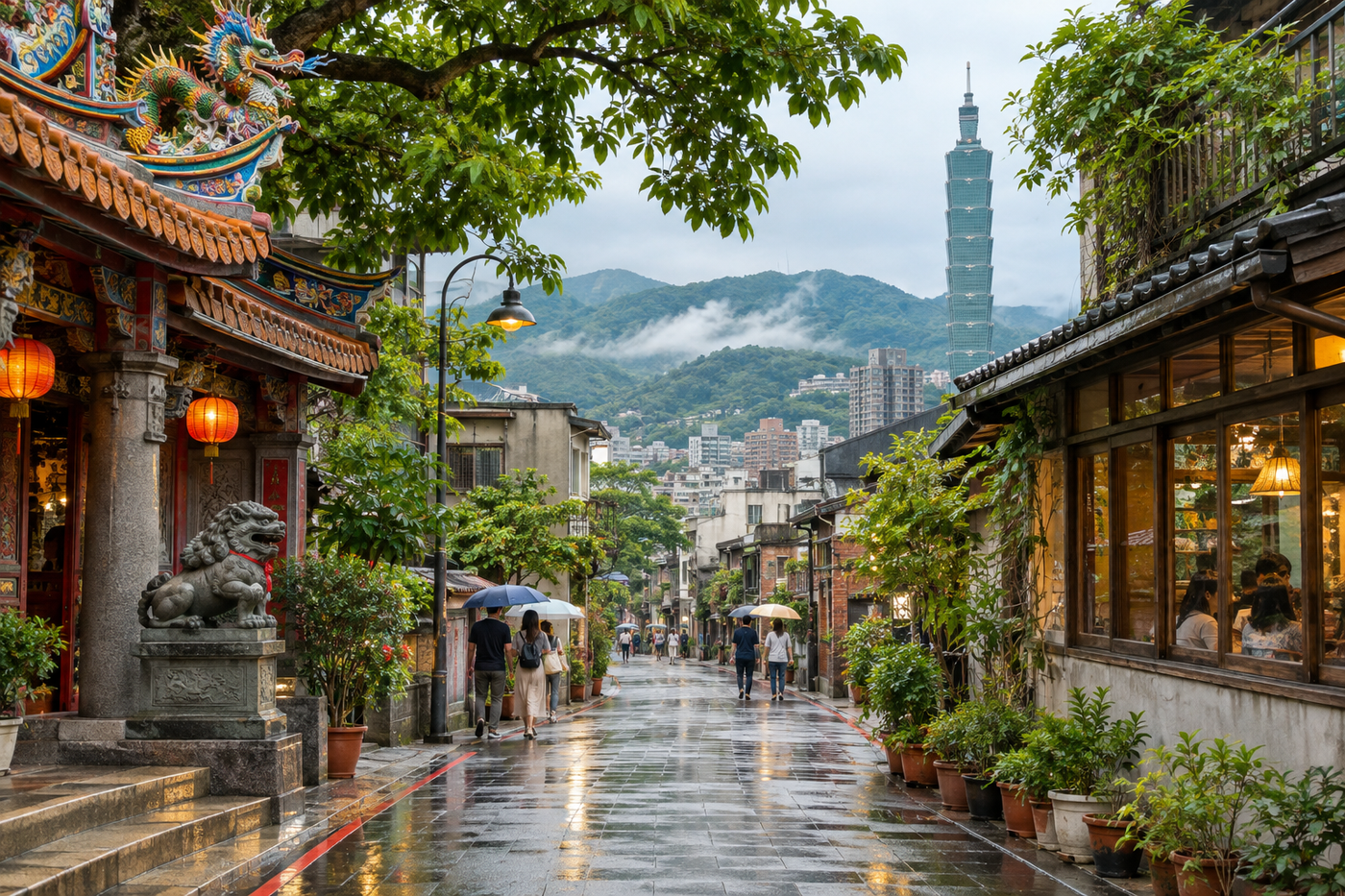
Taipei is a year-round city, but humidity, rain, typhoons, festivals, and school holidays can change the feel and cost of a visit. Use the seasons as a planning tool, then pack for changeable days.
There is no single best month for Taipei
The best time depends on what you want from the city. Mild days suit long neighborhood walks and day trips, cooler weather can make markets and temples more comfortable, and summer brings lush landscapes but more heat and sudden rain. Taipei’s food, transit, cafés, museums, and night markets remain active in every season.
Start with your tolerance for humidity and your priorities. If you want to walk for hours, weather may matter more than a small price difference. If food and indoor culture are central, a rainy period can still be rewarding. Pair this guide with the Taipei neighborhood guide so your base matches the season and your daily plans.

Your trip deserves fewer tabs.
Start planning your tripRead Taipei’s seasons as a practical pattern
Spring is often warm and changeable, summer is hot, humid, and wetter, autumn can bring a comfortable balance, and winter is cooler with periods of rain. These are broad patterns rather than guarantees. A clear winter day can be excellent for a city walk, while a summer day may be bright enough for a mountain trip.
Rain does not always last all day, but it changes how far you want to walk. Build plans around short transit connections, covered markets, museums, and cafés that can absorb a shower. Check the forecast shortly before each day rather than packing or planning from a seasonal average alone.
January and February can feel cool, busy, or both
Winter in Taipei is usually milder than in northern Europe, but damp air can make a cool day feel colder than the number suggests. A light waterproof jacket, layers, and shoes that handle wet pavement are more useful than a heavy winter coat. Indoor food and cultural plans work especially well on grey afternoons.
The Lunar New Year period can affect opening hours, transport patterns, hotel demand, and local travel. If you visit around the holiday, confirm what will be open and book important transport or accommodation early. Outside the peak holiday dates, winter can offer a calmer city rhythm and attractive shoulder-season opportunities.
March and April bring spring energy and changing weather
Spring can be a pleasant time for combining city neighborhoods with parks, hot springs, and nearby hills. Temperatures rise, but rain and humidity may appear in the same week. Pack breathable layers, a compact rain layer, and shoes that are comfortable on steep or uneven paths if you plan a day outside the center.
Spring demand depends heavily on weekends, school calendars, events, and regional holidays. Compare more than one date window if flights or rooms look expensive. A flexible itinerary is valuable because a rainy morning can become a museum visit, followed by a clearer afternoon in a market or riverside area.
May and June are warm, green, and often wet
Late spring and early summer can be rewarding for travelers who enjoy lush landscapes and do not mind planning around showers. The city’s covered passages, metro system, food halls, and indoor attractions make it possible to keep exploring. Humidity can be tiring, so schedule a midday pause and carry water.
Rain gear should be part of the daily plan rather than an emergency purchase. A small umbrella, quick-drying clothes, and a bag that protects electronics are practical. If you are hiking, check local conditions before setting out and be willing to replace a mountain route with a lower, more accessible plan.

Turn your travel ideas into a plan.
Start planning your tripJuly and August require heat and storm awareness
Summer can bring intense heat, high humidity, and heavy rain. Early mornings and evenings are usually more comfortable for outdoor routes, while the middle of the day suits lunch, a museum, shopping, or a rest in an air-conditioned room. Do not mistake a bright morning for a promise that the whole day will stay dry.
Tropical storms can affect transport, tours, and coastal or mountain plans. Monitor official weather information near your travel dates and keep reservations flexible where possible. The best summer itinerary has indoor alternatives already chosen, rather than treating a weather change as a crisis.
September and October are useful shoulder-season months
Early autumn can remain hot and wet, while later October often offers more comfortable conditions for walking. This transition makes the exact dates important. Travelers who want city exploration should compare the forecast and local event calendar instead of assuming October will be cool from the first day.
Autumn is a good time to mix Taipei’s food neighborhoods with a day trip if conditions cooperate. Pack sun protection and rain protection together, and keep one flexible day for moving an outdoor plan. Prices can vary around festivals and weekends, so check the complete calendar before committing to a supposedly quiet window.
November and December often suit long city days
Late autumn and early winter can offer comfortable walking temperatures, though rain remains possible. This is a strong period for night markets, temples, architecture, cafés, and neighborhood wandering because the heat is less demanding. A light sweater or jacket becomes useful after dark and on damp days.
Demand may rise around holidays, major events, and weekends, but the city does not become uniformly crowded. Book a central stay early if your dates are fixed, then use early mornings and weekday visits for popular places. A flexible start time lets you follow the weather rather than fighting it.
Match the season to your trip style
For a first visit focused on walking, autumn and cooler spring periods may offer the easiest balance. For food-focused travelers, any season can work because many highlights are indoors or active after dark. For hot springs and mountain scenery, choose a window with enough flexibility to move the outdoor day.
Families may value shorter transfers and predictable breaks more than a particular month. Photographers may prefer softer light and lower heat, while travelers who dislike crowds should look at weekdays and local holidays before chasing a season. There is no universal answer, only a better match between dates and the way you want to spend them.
Use crowds and prices as signals, not rules
Hotel and flight prices respond to weekends, festivals, school holidays, conventions, and regional demand. A weather shoulder season can still be busy on a particular weekend, and a popular month can have quiet weekdays. Compare several date windows and include transit, luggage, and cancellation terms in the total cost.
Book the parts with limited capacity first, especially a particular room, popular day trip, or timed experience. Keep ordinary meals and neighborhood walks flexible. If your dates are fixed, save money by choosing a well-connected area rather than a distant stay that looks cheaper but consumes time and transport budget.
Pack for rain, heat, and indoor air conditioning
Comfortable walking shoes are essential because Taipei rewards moving between food stops, transit stations, temples, shops, and streets. Add breathable clothing, sun protection, a compact umbrella or rain layer, and one light layer for strong air conditioning. A small towel or spare top can be useful in humid months.
Use a weatherproof pouch for tickets, cards, and electronics. If you plan a mountain or hot-spring day, check any clothing or footwear requirements in advance. Packing for two weather types at once may feel less elegant, but it keeps a sudden shower from controlling the entire day.
Choose dates, then plan for the actual forecast
Many first-time visitors will find late autumn, winter shoulder periods, or the more settled parts of spring easiest for long city days. Summer can be excellent when you embrace early starts, indoor breaks, and flexible outdoor plans. The best date is the one that matches your heat tolerance, budget, and reason for visiting.
Once you book, stop trying to eliminate every weather risk. Check conditions before each day, move one outdoor plan when necessary, and keep food, neighborhoods, and cultural venues as dependable alternatives. Taipei is built for changing plans. A thoughtful seasonal choice gives you comfort, while flexibility lets the city remain enjoyable when the forecast changes.
For a short visit, put your least weather-sensitive experiences on the first day and keep the most flexible day near the middle. That gives you room to swap a hike, market, or neighborhood walk without losing the shape of the trip. Good seasonal planning is not about predicting every cloud. It is about having a sensible next option.
Keep one practical rule in mind: if a forecast makes you hesitate, choose the plan with the easiest exit. Taipei’s metro, cafés, covered shopping areas, and food streets make that simple. You can still have a full day without proving that you can outwalk the weather.