Bangkok travel guide: what to see, where to stay and how to plan your days
 By Maya Rivers
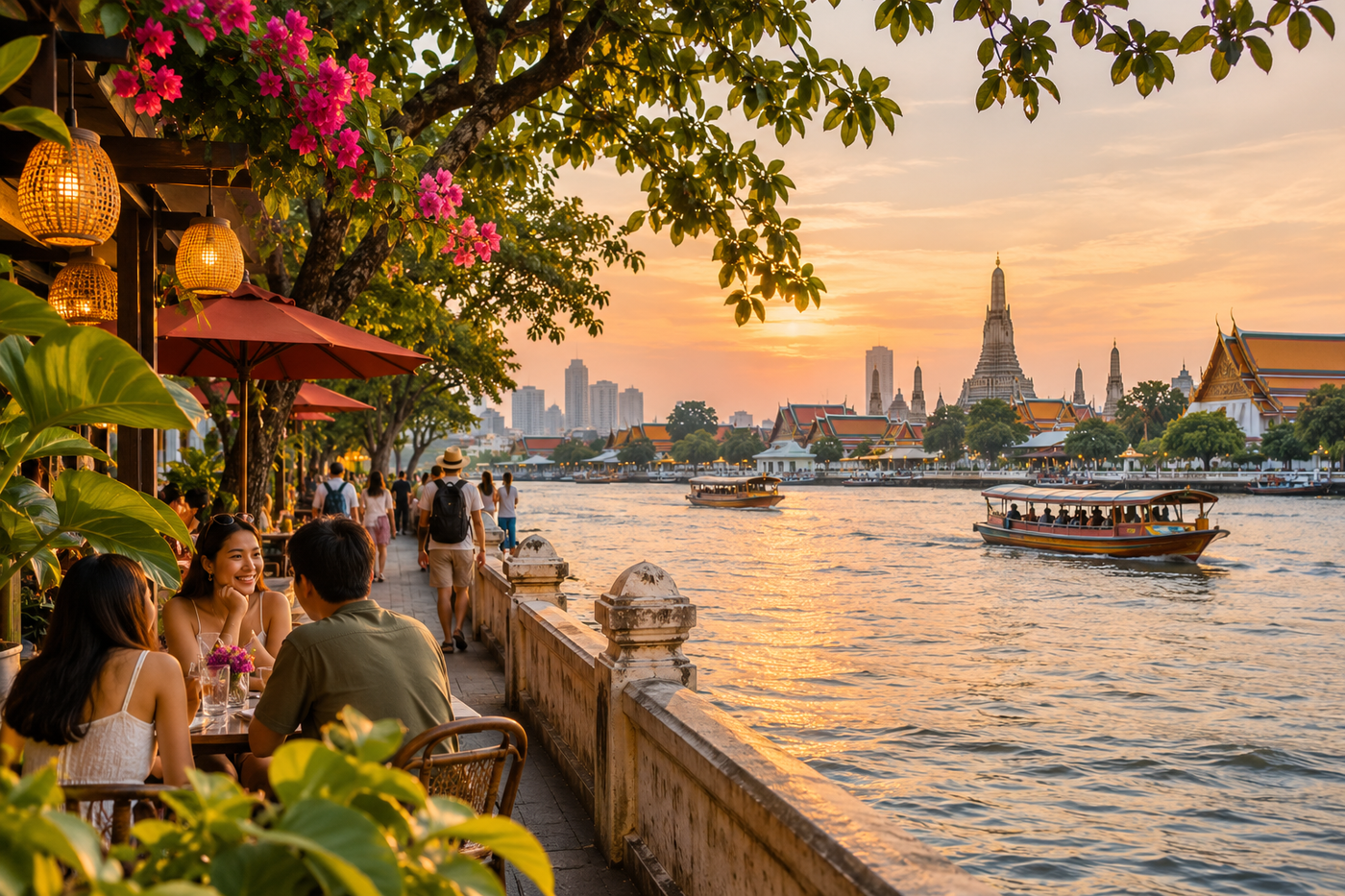
Bangkok rewards a flexible plan. Choose the right neighborhood, group sights by area, and leave room for street food, rain, traffic, and the slower moments that make the city memorable.
Start with the shape of Bangkok
Bangkok is a city of distinct districts rather than one compact sightseeing center. The royal quarter, riverside, Chinatown, Sukhumvit, and the areas around the big shopping malls each have a different rhythm. A first-time visit feels easier when you choose a base that matches your priorities instead of treating every neighborhood as equally convenient.
Plan by clusters. Put temples and the river together, food and Chinatown together, and shopping or modern museums on another half-day. This leaves space for the heat, sudden rain, traffic, and the pleasure of stopping when a market, café, or street corner looks interesting.
Arrival time matters as well. After a long flight, a simple meal and a short neighborhood walk may be a better first evening than an ambitious crossing to the other side of the city. Mark the places you most want to see, then let the route connect them naturally.

Your trip deserves fewer tabs.
Start planning your tripChoose the best area to stay
Riverside hotels suit travelers who want atmosphere, evening views, and easy access to boat routes. Rattanakosin is closer to the Grand Palace, Wat Pho, and Wat Arun, although it has fewer choices for late-night transport. Chinatown is lively, food-focused, and excellent for people who enjoy wandering after dark.
Sukhumvit works well for visitors who value restaurants, malls, nightlife, and the BTS Skytrain. Silom offers a useful middle ground with offices, parks, food, and connections toward the river. Before booking, check the walking route to a station, the likely traffic around your plans, and whether the hotel provides a quiet room away from a busy road.
See the historic heart at a measured pace
Give the old city a morning rather than trying to rush through it. The Grand Palace complex is visually rich and busy, while Wat Pho rewards a slower look at its courtyards and details. Across the river, Wat Arun is especially striking when viewed from the water or from the opposite bank.
Dress respectfully, cover shoulders and knees, and carry water. Temple surfaces can be hot underfoot, and the combination of sun and crowds is tiring. Arrive early where possible, use the quietest courtyard as a reset point, and treat the route between sights as part of the experience rather than wasted time.
Make room for markets and Chinatown
Bangkok is often best understood through its everyday food streets. Chinatown is a strong evening choice, with narrow lanes, seafood stalls, sweet shops, and restaurants that become part of the street scene. Go hungry, but start with small portions so you can try several things and stop before the heat becomes uncomfortable.
Markets vary by day and time, so avoid building an entire itinerary around one stall or a specific opening claim. Look for busy counters with good turnover, observe how food is handled, and keep hand sanitizer nearby. A relaxed food walk can be more memorable than a long list of famous restaurants.
Eat beyond the first pad thai
Use Bangkok as a chance to explore contrast: fragrant noodle soups, grilled chicken with som tam, crisp roti, rich curries, fresh fruit, and small desserts served from carts. Food courts in department stores are useful when you want variety, seating, and clear prices, while small neighborhood restaurants offer a more focused meal.
Order one dish at a time when you are unsure about spice. Rice, herbs, and a cold drink can balance a meal, but do not assume every dish can be made mild. If you have allergies, learn the relevant Thai words, explain clearly, and carry a backup snack for long travel days.

Turn your travel ideas into a plan.
Start planning your tripUse the right transport for each distance
The BTS Skytrain and MRT Metro are the most predictable choices for major east-west and north-south journeys. They are air-conditioned, quick, and particularly helpful when roads are congested. Boats are practical for riverside sightseeing, while walking works best for short routes within one neighborhood.
Ride-hailing can be convenient, but allow extra time for a driver to reach you and for traffic to change the pickup point. Taxis should use the meter where available. Tuk-tuks can be fun for a short agreed trip, but settle the price first and keep your destination clear. Do not squeeze too many cross-city transfers into one day.
Plan around heat, rain, and energy
Bangkok is easier when your schedule has a cool indoor break. Put the most exposed walking in the morning, then use lunch, a museum, a mall, or a hotel rest as a deliberate pause. Heavy rain may pass quickly, but it can still make sidewalks slippery and roads slow.
Wear comfortable shoes that can handle uneven paving, carry a small umbrella, and keep a dry layer in your day bag. A plan with two main anchors and one optional idea is usually stronger than a timetable filled from breakfast to bedtime. The city will supply plenty of unplanned choices.
Follow a realistic three-day outline
On day one, settle into your neighborhood and explore the river or old city. Combine Wat Pho, the Grand Palace area, and a river crossing only if your energy and clothing make it comfortable. Finish with a calm dinner close to your hotel rather than adding a long transfer.
On day two, choose Chinatown for food and wandering, then add a market or a modern district. On day three, use the BTS or MRT for a shopping, museum, café, or park day. Move the river or temple morning according to the forecast. For more itinerary inspiration, compare this plan with four days in Bangkok and the longer seven-day Bangkok itinerary.
Choose top sights that fit your trip
First-time visitors often want the Grand Palace, Wat Pho, Wat Arun, Chinatown, a river ride, and at least one market. That is already enough for a rewarding visit. Add Jim Thompson House, a contemporary gallery, Lumpini Park, or a rooftop view if those match your interests rather than because a list says you should.
Keep a simple priority system: one essential, one worthwhile extra, and one flexible option each day. If a line, storm, or tired group changes the plan, you can swap the extra without feeling that the whole day has failed.
Handle money, connectivity, and small logistics
Carry a mixture of payment options and some small cash for food stalls, small taxis, and places that do not accept cards. Tell your bank about travel if required, protect your phone in crowded areas, and keep a note of your hotel address in both English and Thai.
An eSIM or local data plan makes maps and ride-hailing easier, but download key areas for offline use. Carry water, tissues, sunscreen, and a small bag for wet items. These minor preparations matter because Bangkok days often involve heat, crowds, and several different transport modes.
Avoid the common first-visit mistakes
Do not assume a short distance will be a short journey at rush hour. Do not book a far-away hotel because it looks cheap before checking the route to the BTS, MRT, or boat. Avoid packing every major temple into one afternoon, especially after a long flight.
Be cautious with unsolicited offers that redirect you to a different attraction or shop. Check official ticket points where relevant, agree prices before a ride, and leave space for ordinary neighborhood life. Bangkok is not a puzzle to conquer. It is a city that becomes more enjoyable when you notice its pace.
Turn the ideas into your own board
Start with your hotel area, arrival time, and two or three experiences that matter most. Place nearby sights on the same day, keep one indoor alternative ready, and save restaurants or markets as flexible pins rather than fixed obligations. This gives you a route without removing the ability to follow your curiosity.
A useful Bangkok plan balances structure and breathing room. When the essentials are grouped sensibly, you can spend more attention on the food, river light, temple details, and conversations that make a first visit feel personal.
Leave space for a final Bangkok moment
Keep your last morning simple unless your departure is late and your transport is confirmed. A final breakfast, riverside view, or short market walk can be more enjoyable than adding one distant sight. Pack with the weather in mind and allow time for traffic to the airport.
Before leaving, note the places you would return to and the parts of the city you only glimpsed. That small reflection helps turn a first visit into a useful starting point for a future trip, rather than a checklist that must be completed in one go.