Where to stay in Maldives: neighborhoods, budgets and trip styles
 By Elena Hart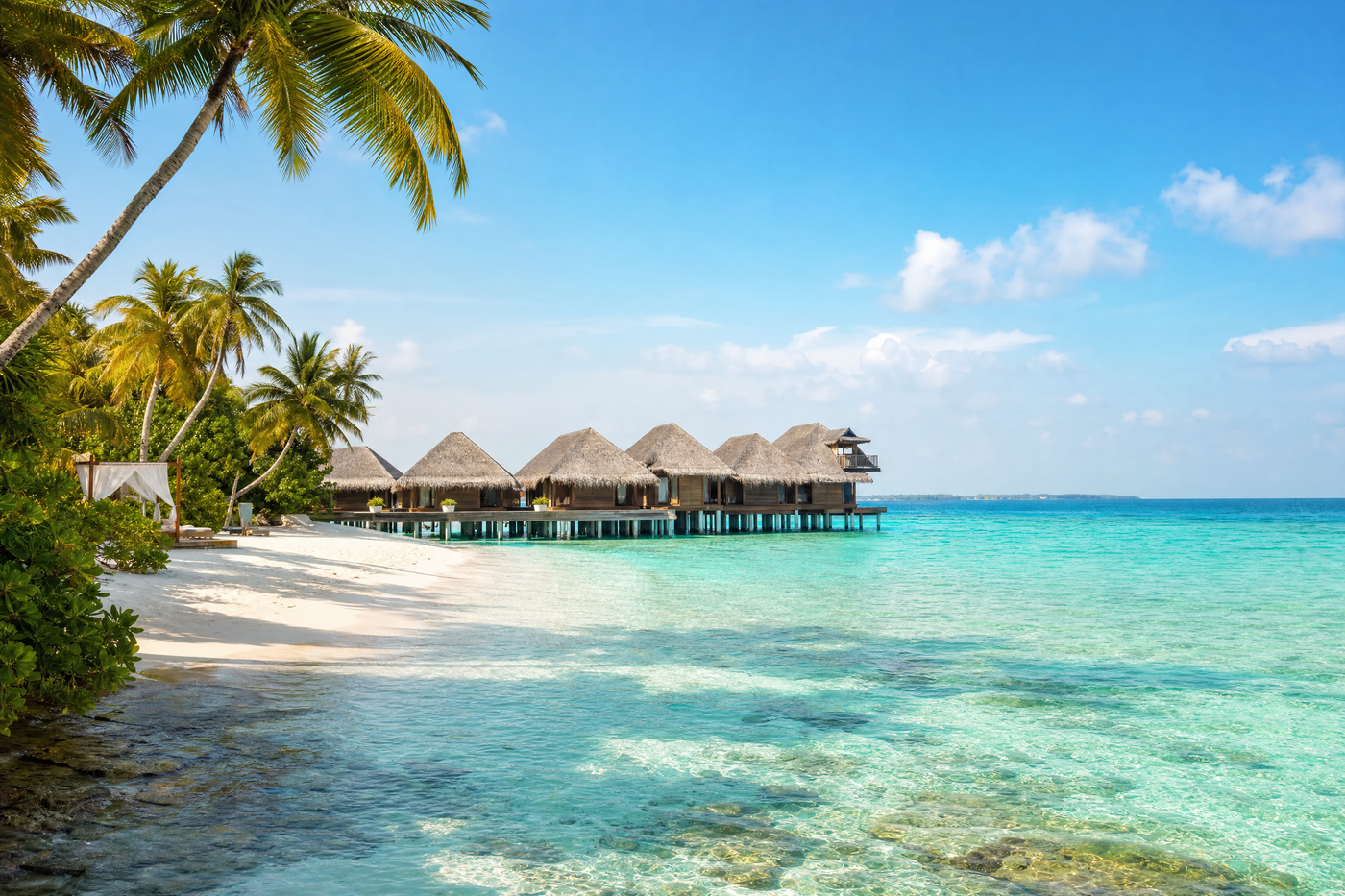
With over 1,000 islands, choosing where to stay in the Maldives can be tough. This guide breaks down key areas, budgets, transport access, and the best options for couples, families, solo travelers and short visits.
Understanding Maldives geography and accommodation
The Maldives is an island nation dotted across the Indian Ocean, southwest of Sri Lanka, comprising 26 atolls and over 1,000 islands. While this evokes images of dreamy overwater bungalows, the country’s accommodation scene is more diverse than many expect. Choices range from private, self-contained luxury resorts on secluded islands to smaller guesthouses on inhabited local islands, as well as city stays in the condensed capital, Malé. Each area offers a distinct style, with tradeoffs related to budget, transport complexity, and the atmosphere you’ll experience.
Despite the distances between islands, traveling around the Maldives is surprisingly straightforward—if you know how areas and transport options interconnect. Picking your base will shape your experience, so it pays to understand the region before you book.

Your trip deserves fewer tabs.
Start planning your tripMalé City: urban gateway and quick-stop base
Malé, the capital, is the Maldivian hub for international arrivals and inter-island transfers. With a population exceeding 200,000 in a tiny 9 km² space, it feels surprisingly urban. Malé’s offerings suit travelers who want an authentic city experience, have a super short layover, or need affordable accommodation for an early flight or late boat connection.
Hotels in Malé range from neat, midrange business hotels to wallet-friendly guesthouses. The atmosphere is busy and local, with mosques, markets, and contemporary island life on display. Nightlife is limited, and alcohol is prohibited in town, but you’ll find local cafés and a safe, walkable vibe. For longer stays or beach holidays, Malé is not recommended due to its density and lack of calm oceanfront.
Hulhumalé: convenience and budget for transits
Hulhumalé is a newly reclaimed island just north of Malé, a few minutes’ taxi or bus from Velana International Airport. It’s a logical, budget-friendly option for travelers with late or early flights or anyone seeking a stopover en route to an atoll resort. The vibe is relaxed and noticeably quieter than Malé, with some swimmable stretches of local beach, a handful of modern hotels and guesthouses, and fewer crowds.
Hulhumalé is ideal for quick access to the airport and attractions like local cafés, food trucks, and seaside promenades. Alcohol is not permitted on the island, so nightlife is limited to relaxed beachside dining or waterside strolls. For safety-conscious travelers, Hulhumalé is well-policed and has a family-friendly, calm feel.
Resort islands: iconic privacy for couples and families
The heart of the Maldives experience for many is the ‘one-island, one-resort’ concept: private resorts that occupy entire islands, with no public influx. Here, you’ll find the famous overwater villas, beachfront suites, and world-class service—made to feel like you have your own slice of paradise. Most resorts offer a package that includes transfer from the airport, be it by speedboat or seaplane.
These resorts can be found across all price points. While ultra-luxe names dominate the headlines, many resorts cater to midrange travelers, and some even offer all-inclusive or family-friendly options. Resorts are best for honeymooners, privacy-seekers, and families wanting a hassle-free stay with excellent amenities, supervised kids’ clubs, and a spectrum of water sports—often in a safe, enclosed environment. The main drawbacks are cost, limited exposure to local culture, and a sense of being ‘captive’ to resort prices for food and activities. Beach safety is generally excellent, with lifeguards and attentive staff common.
Local islands: affordable immersion in Maldivian life
Since 2009, tourists can stay on inhabited ‘local islands’, opening a variety of affordable guesthouses, boutique hotels, and homestays. Here, travelers mingle with local communities and enjoy lower prices for food, diving, and rooms—often less than a third of comparable resort costs. Islands like Maafushi, Thulusdhoo, and Dhigurah are popular not only for savings but for their inviting social atmosphere and authentic food options.
Each local island has its own character: Maafushi is lively and social, Thulusdhoo is surfers’ central with a relaxed vibe, and Dhigurah is tranquil and long-beached—great for whale shark excursions. Note, on local islands, modest dress is required on public beaches (though most have designated 'bikini beaches'), and alcohol is not permitted. Accommodation is simple but diverse, ranging from sociable hostels to stylish boutiques. Local islands suit adventurous couples, solo travelers, and budget-minded families, as well as anyone wishing to interact with everyday Maldivian culture—while enjoying very safe, small-town settings.

Turn your travel ideas into a plan.
Start planning your tripNorth and South Malé Atolls: convenient picks for short stays
North and South Malé Atolls are the closest atolls to the airport and capital, making them practical for anyone seeking maximum beach time with minimum transfer hassle. Resorts in these atolls are usually reached by speedboat within 30–60 minutes—no need for expensive seaplanes or risky timing tight connections.
Both atolls offer a wide range of properties, from famous honeymoon resorts to affordable boutique stays. The reefs are excellent for diving and snorkeling, and the accessibility is especially appealing for families with kids, short-break travelers, or those worried about missing connections due to weather. You’ll sacrifice some remoteness compared to distant atolls, but safety, reliable transfers, and choice are guaranteed.
Ari Atoll: the all-rounder for divers and wildlife fans
Located a scenic 25-minute seaplane ride or 90-minute speedboat trip from Malé, Ari Atoll (sometimes split into North and South sections) is a standout for underwater adventures. Its waters are bustling with whale sharks, manta rays, and vibrant reefs; both divers and snorkelers flock here year-round. Accommodations are diverse, with luxurious private-island resorts sharing space with local islands like Dhigurah, known for affordable guesthouses and reliable excursions.
Ari Atoll’s well-developed tourist infrastructure means easy planning, reliable transport, and options for all budgets. Families find plenty of large resorts with safe, child-friendly beaches, while solo travelers enjoy sociable guesthouses and dive schools. While transfers are more complex than the closest atolls, the payoff in marine life and stellar beaches is substantial. Safety infrastructure is strong, with attentive resort management and trustworthy local providers.
Baa Atoll: Unesco biosphere and remote luxury escapes
Baa Atoll, a Unesco Biosphere Reserve, is famed for its healthy marine ecosystems and superb snorkeling, especially during the manta ray season (June–November) at Hanifaru Bay. Luxury eco-resorts like Soneva Fushi and high-quality mid-range properties are the norm here, appealing to couples, wellness seekers, and families prioritizing sustainability and marine life encounters.
Access is mostly via 35-minute seaplane transfers, which add to the cost and planning. This atoll is best for those seeking unspoiled nature without crowds and for travelers wanting a more exclusive, eco-conscious getaway. The remoteness means fewer local-island options, limited nightlife, and less exposure to Maldivian urban culture, but provides a peaceful, safe environment with attentive guest service and superb child safety standards in the water.
Thulusdhoo: surfers and budget socializers unite
Thulusdhoo, in North Malé Atoll, is renowned for its world-class surf breaks like Coke’s and Chicken’s. It’s a magnet for surfers, backpackers, and budget travelers. The island has grown a friendly cluster of guesthouses, surf camps, and casual eateries, all built around an easygoing, sociable beach town atmosphere. There’s a designated bikini beach, regular ferries from Malé (1.5 hr), and easy access to diving, fishing, and excursions.
Thulusdhoo suits solo travelers, groups of friends, and adventurous couples who want wallet-friendly accommodation with a social vibe. Local traditions are respected, so modest dress is required outside of the bikini beach, and alcohol can be consumed only on special floating bars anchored offshore. Safety is excellent: the island is small and community-oriented, and beaches are well-used by travelers and locals alike.
Maafushi: top value base for every traveler type
Maafushi is the original local-island success story: it’s accessible (30 minutes by speedboat from Malé), very safe, and brimming with guesthouses and small hotels catering to all budgets. It’s popular with solo travelers, couples, families, and social groups thanks to its lively, friendly vibe and endless possibility for excursions—sandbank picnics, snorkeling, diving, dolphin watching, even short resort day trips.
Maafushi’s multiple bikini beaches allow relaxed sunbathing and swimming, and there are many local restaurants, cafés, and tour shops. As with other local islands, no alcohol is sold on land, though floating party boats offer drinks for those who seek them. Maafushi is especially ideal for families and solo travelers who want great value but an uplifting, energetic atmosphere. The island is safe, with well-lit public spaces and an inclusive, supportive local community.
Safety, transport and practical area selection tips
- Transport: Most resorts bundle speedboat or seaplane transfers from Malé; local islands are reachable by public ferry or private boat.
- Budget: Private-resort islands are pricier but all-inclusive; local islands offer huge value and affordable independent dining.
- Trip style: Couples and honeymooners will love resort islands; solo travelers and adventurous families often prefer local islands for cultural connection and cost.
- Safety: The Maldives is generally very safe, with low crime on both resorts and local islands. Always follow water safety advice and respect local customs on inhabited islands.
- Access: For short breaks, stick to Malé Atoll resorts or guesthouse islands to avoid long, costly transfers.
When choosing your area, consider transfer timing with your flights. Check for direct speedboat access if you’re arriving late or leaving early. If your focus is diving or surfing, base yourself accordingly—Ari Atoll for marine life, Thulusdhoo for surf. For relaxation and luxury, pick a remote resort but allow for seaplane costs and possible delays caused by weather.
Matching Maldives areas to your trip style and budget
Couples and honeymooners gravitate toward private island resorts, seeking romance and tranquility, often with the convenience of all-inclusive meals and activities. Families may prefer larger resorts with kids' clubs and gentle lagoons, but adventurous families often thrive on local islands like Maafushi or Thulusdhoo for sociability and excursions. Solo travelers generally find local islands more welcoming, cost-effective, and connected, with dive shops and communal tours fostering friendships.
Short-stay or transit travelers should focus on Malé, Hulhumalé, or the nearest atoll resorts, minimizing transfer time to maximize beach hours. For every group, local islands provide enormous cultural and economic advantages, while private resorts deliver the postcard-perfect luxury for those ready to splurge. Prioritizing safety, transfer convenience, and the activities you value most will help you choose your perfect Maldivian base for a memorable trip.